
Blog
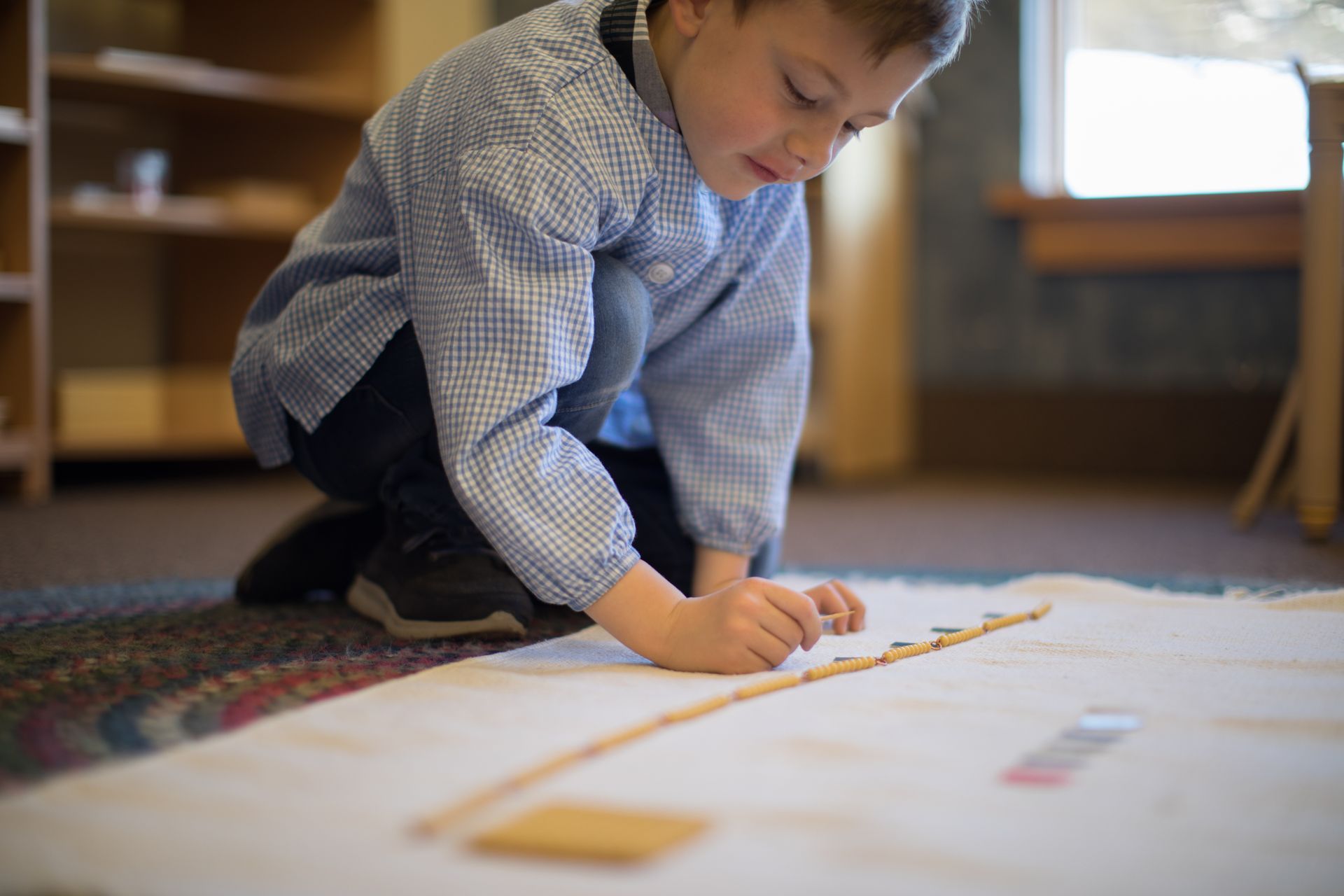
Discover how Montessori Bilingual Academy builds independence, confidence, and bilingual communication through individualized learning, purposeful practice, and meaningful experiences in Spanish and English.
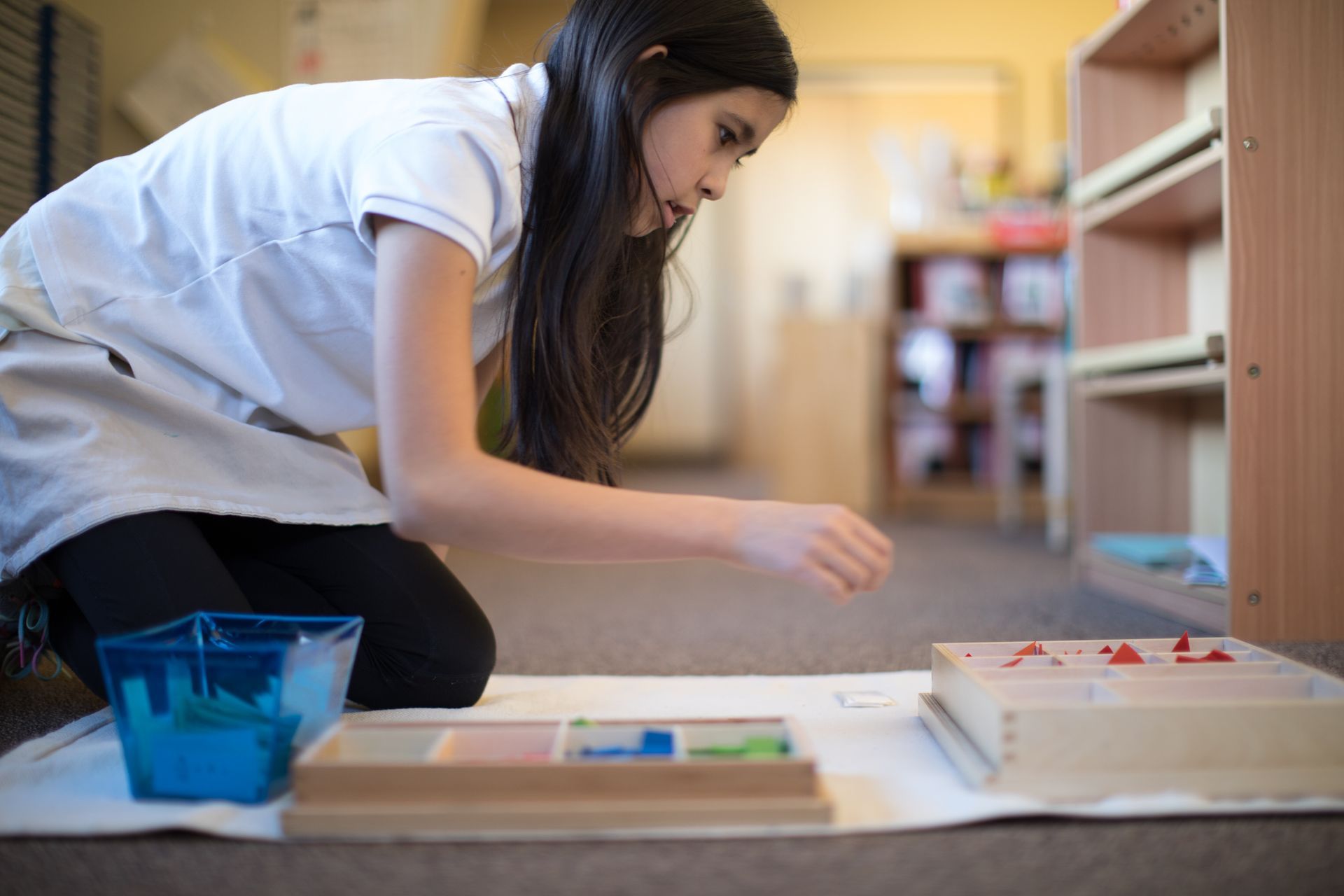
Discover how Montessori Bilingual Academy helps children build resilience, independence, confidence, and bilingual communication through appropriate challenge and strong home-school partnership.

This is a subtitle for your new post

Adolescents exist between two worlds: they are no longer children but they aren’t yet adults. On this bridge to adulthood, adolescents need opportunities to develop real, meaningful, adult-level skills. They aspire to do what adults do. They are curious about how to make their own way in the adult world. As adults, we are part of an economic system. Even if we aren't using money to buy something, through our work or our hobbies we produce or consume aspects of culture. In this way, economics is about the web of interdependence we have with other people. We all depend upon the work and activity of others. Economics and Interactions If we look at economics as how people offer value in their interactions, as well as the production, distribution, and consumption of services and goods, we can really think about economics as how we organize ourselves in society. Because adolescents are building the skills for stepping into the adult world, it’s important to consider how they are developing their ability to navigate this economic aspect of adult life. How many of us had the opportunity, as adolescents, to develop the skills necessary for economic independence? How would our lives be different if, as adolescents, we had a support system so we could Oigure out a fair and reasonable cost for goods we produced, faced the reality of a proOit and loss statement, or found our way in navigating the paths of spending, saving, and sharing? Road to Achieving Economic Independence Dr. Maria Montessori realized the importance of adolescents developing these kinds of skills. In From Childhood to Adolescence, Dr. Montessori made a bold statement about our approach to education and its impact on the greater society. She stated it clearly: “The essential reform is this: to put the adolescent on the road to achieving economic independence.” So in Montessori adolescent programs, we offer our emerging young adults the opportunity to learn key skills of production and exchange. We sometimes call this “microeconomy.” The basic idea is that adolescents need opportunities to produce goods and services, and work with money and monetary systems, so they can develop an understanding and appreciation for how economies work and their own role in economic systems. Real, Meaningful, and Purposeful Work This experience can take many different forms depending upon the community. Whether running a farm stand or a holiday marketplace, adolescents get to learn key skills. They learn to balance proOit and loss. They discuss and determine how much money should be reinvested into the business to help it grow or how much money should be reinvested in the greater community. They respectfully listen to their customers’ needs and concerns and incorporate that feedback in useful ways. In order to have these learning experiences, adolescents need real, meaningful, and purposeful work. Just like young children need to actually prepare food rather than play with a pretend kitchen set, adolescents need actual experiences in creating a business plan, keeping track of income on a spreadsheet, and balancing a budget. They need to practice accounting work so they can build the skills for their own economic independence. They need to have the thrill of handfuls of cash and then face the responsibility of keeping track of those earnings. They need the experience of paying for replacement materials when they have overused key supplies. If they have developed some savings and want to invest the money, they need to Oind opportunities that align with their values. Preparing for Adult Life Too many of our young people enter the world of adult lives without having experienced their role in an economy (perhaps other than being consumers!). Economic independence is a key part of preparing for adult life. We want our adolescents to step into maturity with conOidence that they can independently navigate their new responsibilities and roles. If we give adolescents the opportunity to learn how to have a sound basis for their economic decisions, imagine where they will be when they are adults and making decisions that affect broader aspects of society!
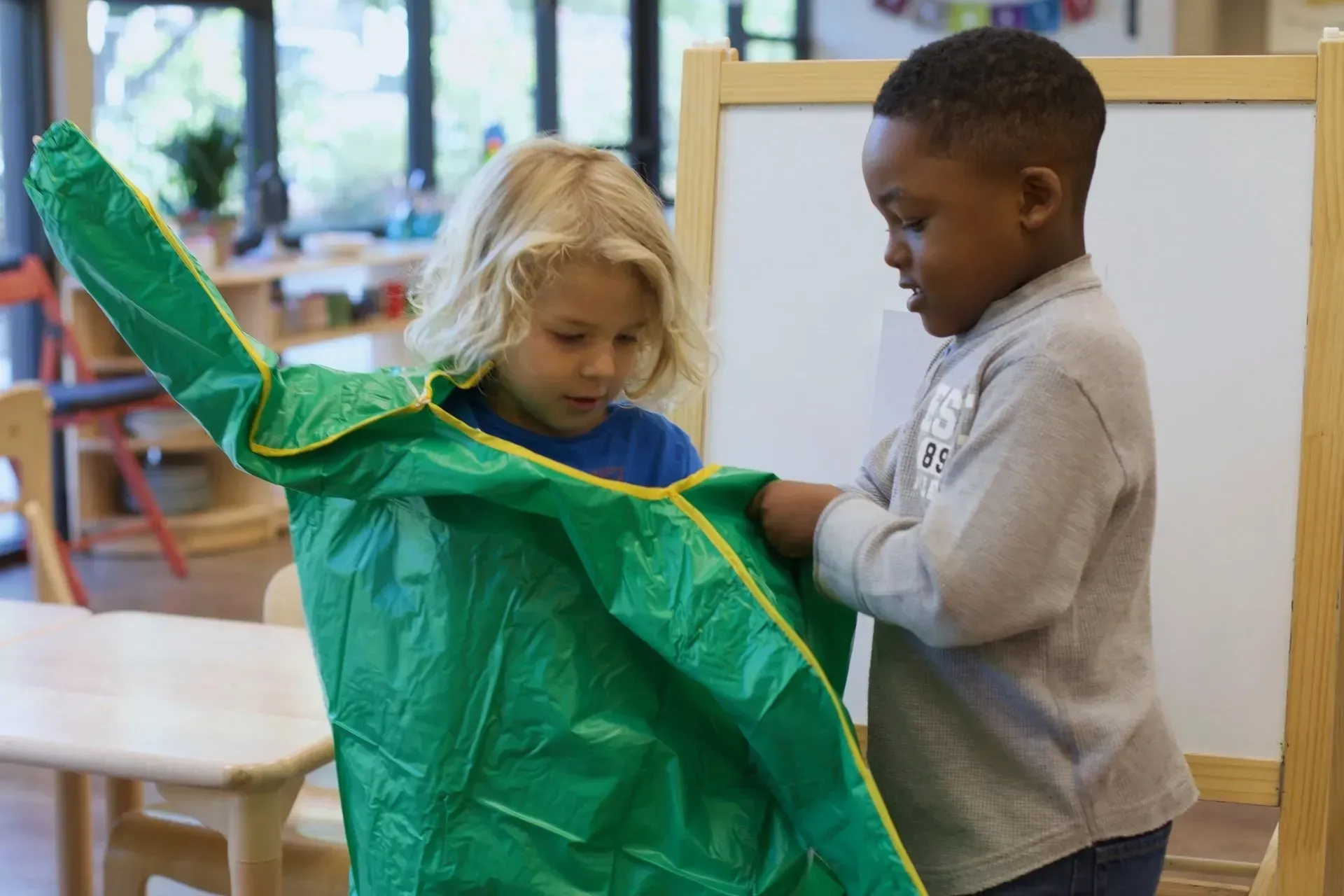
In Montessori, we talk a lot about independence. However, one of the lesser known or understood aspects of Montessori is that independence isn’t the end goal. As humans, we are each wonderful, unique individuals. But we don’t exist in isolation. We live amongst other wonderful, unique individuals! In order to effectively live in community with other people, though, we need to be able to function independently. Said another way, before we can offer help to others or make ourselves useful, we need to be able to meet our own needs. How can we be independent and interdependent at the same time? We all want to make choices for ourselves, exercise our liberty, and be responsible for our own lives. At the same time, we also want to be part of something. We are designed to be both independent and be in community. These two needs are not mutually exclusive, but in fact, operate in relationship to each other. We have an innate desire to be autonomous and to belong. When we develop the ability to act for ourselves, make choices, control ourselves, and accept responsibility, we are able to be functioning, contributing members of society. We can see what needs doing and do it because we have the skills to do so. We can work with others to create solutions or produce goods and services. We can be part of a community by acting and taking responsibility for our actions, each able to contribute because we all have the skills to do so. What does this have to do with children and Montessori education? From a very young age, children are trying to exert control over their lives. Children are trying to gain functional independence from birth to about age three. In Montessori classrooms, we offer all sorts of opportunities for young children to develop skills that help them take care of their basic needs. But we don’t stop there! We also provide so many ways children can care for others and for their surroundings. Once children have mastered pouring from one pitcher to another, they are able to pour water into a vase and arrange flowers to beautify the classroom. After they learn how to sweep, they are quick to notice a spill and rush to get the dustpan and dust brush so they can help. When someone is struggling to zip their jacket, they take pride in sharing their newfound skill in service to someone else’s need. As children move into the elementary years, this service to others often takes on a slightly different form, in part because elementary-age children are developing their intellectual independence. Thus, their contribution often involves applying these newfound intellectual skills. They might notice a classmate struggling to figure out the steps in a math problem and offer support. Or when friends are in conflict, they might provide some mediation to help each party listen to the others’ perspective. In adolescence, young adults are ready to work toward being socially and economically independent. They want to figure out their place in society, grapple with real problems, and contribute in a useful way. Thus, Montessori adolescent programs offer teens the chance to develop and feel secure in their own abilities while also collaborating in real and meaningful social endeavors. In the process of running a small business, for example, adolescents are applying their intellectual skills from marketing to mathematics, while also navigating how to communicate with customers and collaborate with classmates. Why is this important? As humans, we want to achieve independence and belonging. Being independent is about learning the skills to be able to contribute in a meaningful way. All the little conquests of independence–throughout each age and stage of development–matter! When our infant reaches to grasp an object, our two-year-old demands to put their shirt on themselves, our eight-year-old argues about just and fair rules of a game, or our adolescent insists they can solve a problem with their peers, we can remember that these acts of independence are laying a foundation for our children to become part of an interdependent, harmonious society. Independence is just a step. Interdependence is the ultimate goal.

"The mind takes some time to develop interest, to be set in motion, to get warmed up into a subject, to attain a state of profitable work. If at this time there is interruption, not only is a period of profitable work lost, but the interruption produces an unpleasant sensation which is identical to fatigue.” -Dr. Maria Montessori, What You Should Know About Your Child Consider, as an adult, what it takes for you to do your best work. What must your environment look like? What do you need from others? What constraints do you need removed in order to meet your goals? Dr. Montessori spent years observing children as they played. She quickly recognized that immense learning takes place during play, leaving it reasonable to call it the child’s work. Left without interruptions, she witnessed pure magic. Children, even very young children, have the capacity for intense concentration. They have the innate ability to work through problems and develop solutions all on their own. They want to do these things. And what’s even better? They do it with a sense of self-satisfaction, not because they feel pressure or expectation to. What Montessori realized is that we, as adults, sometimes need to get out of kids’ way. We often imagine they require more help than they actually do, or that we must offer rewards or incentives to ensure they do their schoolwork, but those assumptions are misguided. What children really need is time, respect, and an environment in which they may focus deeply on their work. Thus, the work period was born. Generally spanning about three hours long in the morning, this precious time is a cornerstone of Montessori education. How does it begin? The start of the work period varies, but typically it begins as children arrive in the morning. For some classes, on some days, and during some parts of the year, there may be a whole class morning meeting or circle time at the start or end of the work cycle. A typical day begins with the child hanging their belongings on a designated hook, changing their shoes, and greeting their teacher as they walk into the room. They may say hello to a friend or two, take a moment to transition, and then select a work from the shelf. Others may be so eager to begin, they waste no time at all and go straight to the material they have been thinking about since the day before. Prior to age six the child will likely work by themselves, but near their peers, most of the time. They may lay out a work rug, set up their material, and delve into a deeply concentrated state. They use the materials in the way they have been taught, then clean up and replace everything when they are done. As children older than six, due to their development and desire for social connection, the start of the day can be a bit noisier and more chaotic. They still get to work rather quickly, although it’s often in the form of group or partner work. What do the adults do? A Montessori classroom typically has two adults present: the guide and an assistant. The assistant busies themselves with ensuring the room stays neat and orderly and that everything the children need is available to them. If children need help or redirection, the assistant is quick to engage while still allowing the child to maintain an appropriate level of independence. This allows the guide to focus on two main tasks: observation and presenting lessons. During the work period lessons are not given to the whole group; individuals or small groups of children work with the guide to learn or review skills and materials. This is done as unobtrusively as possible. Adults in a Montessori classroom do their best not to interrupt the work of a child. If they need to speak with a student, there is often a non-verbal structure in place, such as leaving a name tag beside the child as they are working. This alerts the child to check in with the guide whenever they complete the task they are focused on. Do children really focus the entire time? Not usually! Can any of us truly focus for three hours straight without breaks? We definitely don’t expect our students to, either. This is one of the reasons our environments are designed for students to meet their own needs independently, when the time is right for them. If they feel hungry, they are welcome to have a snack. If they need to use the restroom, they don’t need to ask permission. Even if they just need to get up and stretch their legs or look out a window - we do not prevent children from doing these things. Allowing for breaks lets us all focus better in the long run anyway. There is one interesting phenomenon worth mentioning here. Sometime around 10:00-10:30 in the morning, toward the end of the work cycle, classroom communities often experience what we refer to as false fatigue. Like clockwork, the volume of the children’s voices will rise, there is noticeably less engagement with the materials, and fewer children are sitting in one place - rather they seem to be wandering around the room. The adult instinct is to ring a bell or clap and make a plea for re-engagement, but we have learned to hold back. False fatigue is a normal part of the flow of the day. If we pause, observe, and wait even two or three minutes, we will see the children find their way back into their work. It can be pretty amazing to observe. What might one work period look like for an individual child? This article has probably already given you a fairly good idea of what this might look like. Once the child completes their first work of the day, they begin another. This repeats for the duration of the morning, but is fractured by any number of other activities. The child will likely have a lesson or two with their guide while the rest of their classmates continue working independently. At some point, the child will get hungry, have a snack, and clean up after themselves. They may take several water breaks, socialize with friends, or even spend some time watching a squirrel climb a tree outside. In short, the work period is a way to honor the child’s way to balance focused learning with meeting one’s own needs, on one’s own timetable. It’s a way to show the child we trust them, and our students absolutely rise to the occasion. Curious to see what a morning work period looks like in action? We would love to have you visit. Reach out today to schedule a time to observe.
Montessori programs for adolescents are on the rise. There is a strong interest among parents, and for good reason! Montessori adolescents experience a rich educational setting that is unlike anything found in conventional education today. The best news? Montessori adolescent programs are backed by research. Read more to find out how. Montessori programs lead the way in supporting adolescent autonomy, competence, and self-determination. Based on past research that has shown strong correlations between self-determination and achievement, this study sought to measure the former in seventh-grade students. Data collection relied on student voice, a measure that researchers and others state to be the most valuable in making decisions regarding education. A guiding question of the study, which examined how these seventh graders acclimated to their new environment, was, “How would a learning environment designed to support students’ development of autonomy, competence, and relatedness affect their sense of self-determination during their seventh-grade year?” The BNSW-S (the basic needs satisfaction at work scale) was modified so that the wording was applicable to students. Student volunteers then completed the survey and their scores were used to determine their various levels of self-determination (below, at, and above-expected levels). From there, one male and one female student at each of the levels were chosen to participate in the study. Students in the study were asked specific, open-ended questions that necessitated a narrative response. After transcribing and analyzing the interviews, some of the most commonly shared thoughts and themes were as follows: Choose type of work Choose order of tasks Scared at first...now I can Organize time More Social Confidence Capability to do well in high school Teacher care: help me stay on top of things Student care: community meeting Several interesting themes emerged. It was clear that all student participants had a strong sense of choice in their school experience. While students felt uneasy about their ability to complete their work at the start of the school year, by November all students felt confident in that area. Another interesting finding is that students overwhelmingly spoke about the support they received from their teachers. Researcher Casquejo Johnston suggests that conventional educators of middle school students who are interested in reform consider finding ways to implement personalized learning and community support, both of which are hallmarks of Montessori adolescent programs and can be attributed to the study’s positive findings. In Montessori adolescent programs, STEM is naturally cross-curricular and mirrors real-life scenarios. The concept of STEM (science, technology, engineering, and mathematics) in education is theoretically meant to be taught in a cohesive, interdisciplinary, and authentic manner. Realistically, this is rarely the case, and “STEM disciplines are often implemented separately using contrived contexts”. The researchers of this study argue that Montessori, by design, meets the theoretical intentions of STEM while also mirroring the challenges faced locally and globally, giving students practical experience and meaningful learning. They felt that in Montessori adolescent environments, STEM occurs naturally and organically, because “In these spaces, interdisciplinary science, technology, engineering and mathematics learning is contextualized within the real work of running a farm.” In a Montessori Erdkinder environment, students are required to meet the needs of the working farm. This allows them to face challenges and learn critical STEM skills that are required in doing so. The farm is a business, and the students must not only care for the farm itself, but successfully run the business. Working together with peers and adult guides to do so gives them the necessary skills to contribute as successful adults in their communities. Researchers surveyed guides at Montessori adolescent programs across the United States asking a variety of questions, including both scaled and short-response open-ended questions. A total of 96 responses were collected. Interestingly, most respondents hailed from programs that did not utilize the traditional Erdkinder farm program, but rather a different program more suited to their school, as well as strong implementation of other core Montessori principles. Six important themes emerged as components of Montessori adolescent programs surveyed: Authentic & contextualized work Community & communities of practice Integrated STEM teaching & learning Holistic education Driven by student interests and funds of knowledge Socio Cultural & socio political connections The researchers concluded that their assumptions regarding Montessori adolescent programs’ authentic and meaningful application of STEM were correct. They believe the model has much to offer students, as well as serving as a basis from which other educational settings should derive inspiration. Montessori adolescents report higher intrinsic motivation, interest, energy, and more compared with peers in traditional settings. In this study, 290 middle school students from both Montessori and traditional schools were surveyed. Analysis of the results indicated that the Montessori students displayed: Greater affect Potency (feeling energetic) Intrinsic motivation Flow experience Undivided attention (a combination of high intrinsic motivation and importance) Researchers noted that many studies have revealed the struggles most adolescents face during this period in their lives, and the unfortunate fact that most adolescent educational programs are not designed to meet the specific needs of the children they are meant to serve. They note that while Montessori education is typically associated with early childhood, they believe there is important information to be learned about the model’s approach for older children. When considering the ideas set forth by numerous researchers regarding adolescent’s needs for their educational settings, Montessori provides solutions to current problems in mainstream education. Young people need experiential learning, opportunities for metacognition, increased autonomy, and a model that honors their drive to work with peers. Typical middle school environments enact strict and rigid policies; Montessori does not. Teens in Montessori environments are given structure and guidance, but also a good amount of freedom and choice. The Montessori schools that were chosen for this study had the following characteristics in common: each had a built-in philosophy of intrinsic motivation, rather than block periods they allowed for extended periods for self-directed work, neither grades nor standardized tests were used for comparison or placement, students took a prominent role in daily decision-making, and small-group work was encouraged over whole-class lectures. Researchers noted that Montessori students did, indeed, display significantly higher levels of intrinsic motivation. They suggest that Montessori adolescent environments might serve as excellent models for traditional middle school reform across the United States.
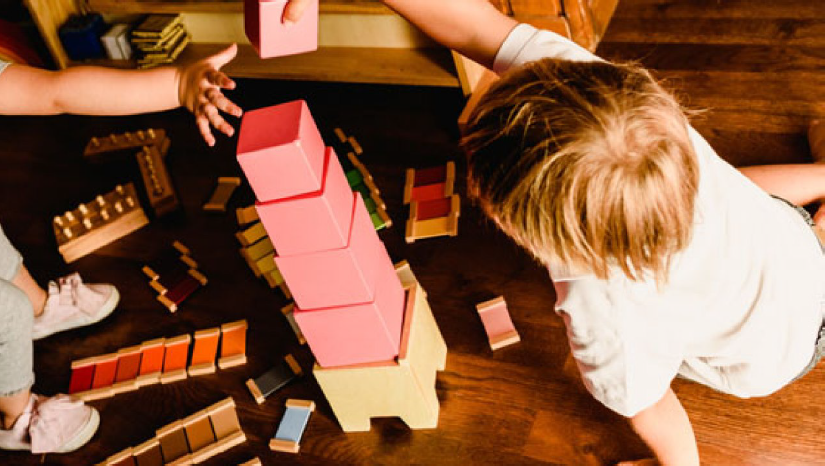
You already know that Montessori is different from conventional education methods. You may have heard some folks rave about the benefits while others share their doubts. The truth is, there are a lot of differences. Montessori education is nothing like the type of schooling that most children experience – including us adults when we were children. Understanding the differences can help you decide whether or not Montessori might be a good fit for your family. We invite you to read the comparison below, then come see for yourself. Visiting our classroom environments in person is the very best way to understand our approach. When viewing this chart please keep two important points in mind: All schools are different. There is no one standard for conventional or Montessori educational settings. The statements below are generalizations, thought widely considered accurate. You may see similar charts like this floating around the internet. Ours is different in that we aim to provide factual, observational comparisons. The intention is not to convince you that Montessori is somehow better, but to assist you in your decision-making process. We do, of course, believe in the validity of our methods, but we fully acknowledge that Montessori is not the best fit for every family.
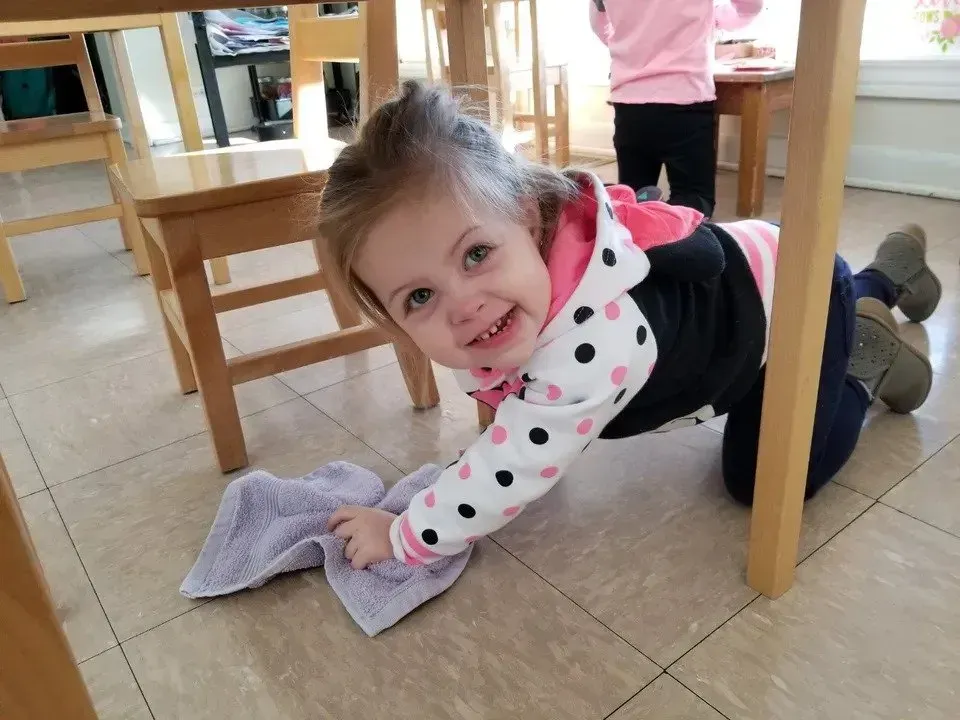
The more we learn about Montessori, the more it tends to seep its way into all aspects of our lives. We find ourselves seeing the world just a little bit differently, and the changes are so positive! This week we thought we would share five simple ways to live a life guided by Montessori values. (You may be surprised to find how closely this aligns to what you already do!) The quotes throughout this article are those of Dr. Montessori herself. 1. Prepare Yourself “The real preparation for education is the study of one’s self. The training of the teacher is something far more than the learning of ideas. It includes the training of character; it is a preparation of the spirit.” Montessori believed that before a teacher could be effective, they needed to rid themselves of preconceived ideas, take a genuine interest in studying the world and the universe, and look inward to ignite change. Since the parents are a child’s first and most influential teachers, this idea extends beyond the classroom. Some helpful questions we might all revisit from time to time: Do we let our children see us as readers? Do they know we read not just out of necessity, but for pleasure as well? Do we approach elements of parenting and learning in certain ways because it’s the way we experienced them when we were younger, or do we take the time to consider other methods and ideas? Have we taken the time to put on our figurative airplane oxygen mask? Are we physically, mentally, and emotionally prepared to show up for others (including our children)? Do we live with a sense of curiosity and wonder? It can be easy to fall into ruts with work and life, but are we remembering to stop and really appreciate the world around us? 2. Prepare the Environment “The environment must be rich in motives which lend interest to activity and invite the child to conduct his own experiences.” “Plainly, the environment must be a living one, directed by a higher intelligence, arranged by an adult who is prepared for his mission.” You already know that Montessori guides put great effort into creating beautiful, functional learning environments that foster growth and independence. You have likely already tried to implement little tweaks to your home environment. It may not come as a surprise to learn that this is an ever-evolving process. Your home should function to serve the needs of everyone who shares it. Whether your home is any combination of infants, toddlers, children, teenagers, adults, and seniors, everyone has different interests and needs. Our advice? Start to notice how your family interacts with the home environment and what can be done to ensure everyone can be as independent as it is possible for them to be. Make changes as the people change. Consider: Access to food and drink Access to personal hygiene items Furniture that is suited to various individuals Lighting that allows for different activities Organization, minimalism, and aesthetic 3. Understand Human Development “Education should not limit itself to seeking new methods for a mostly arid transmission of knowledge: its aim must be to give the necessary aid to human development… If ‘the formation of man’ becomes the basis of education, then the coordination of all schools from infancy to maturity, from nursery to university, arises as a first necessity: for man is a unity, an individuality that passes through interdependent phases of development. Each preceding phase prepares the one that follows, forms its base, nurtures the energies that urge towards the succeeding period of life.” Okay, so this is a tall order. What we can say is empathy goes a long way. Sometimes we stop and remind ourselves that every child is exactly the way they are for a reason. This applies to pretty much every situation and goes for adults as well. Our biology and life experiences shape our behavior, and each stage of life builds a foundation for the next. Every skill learned helps prepare us for another. Every relationship we form develops our social understanding of the world. Want to learn more about children’s development? Read about Montessori’s Planes of Development. 4. Consider a Global Perspective “This is education, understood as a help to life; an education from birth, which feeds a peaceful revolution and unites all in a common aim, attracting them as to a single center. Mothers, fathers, politicians: all must combine in their respect and help for this delicate work of formation, which the little child carries on in the depth of a profound psychological mystery, under the tutelage of an inner guide. This is the bright new hope for mankind.” “The land is where our roots are. The children must be taught to feel and live in harmony with the Earth.” As Montessorians, our teaching is based on the idea that we are all interconnected. And by we all, we mean not just humans, but all living things across the planet, as well as the environment itself. If we consider this perspective it’s easy to see how critical it is for us to all be united. To raise ourselves up as a species we must join together to work toward common goals, and we believe that children are the best inspiration to do so. Each human being is unique, but we are so much more when we think about our connections to each other and to the Earth. 5. Truly Embrace Individuality “Free choice is one of the highest of all the mental processes.” “No adult can bear a child’s burden or grow up in his stead.” “It is not in human nature for all men to tread the same path of development, as animals do of a single species.” When our children are born they rely so heavily on us for every aspect of their care. Our instincts to protect them are fiercely powerful, and we all want them to have every possible advantage in life. This is a good thing; children need people who are always in their corner, ready to support them no matter what. But… We must learn to master the delicate balance of slowly guiding them toward independence. We want our children to be able to do things for themselves, and they are capable of so much. We must also remember to let them be who they are meant to be, not who we imagine them to be. The only person who can determine the path of one’s life is that person themselves. As parents and teachers, our most important task is to support the journey. As we often tell our students, it all boils down to three simple guiding principles: care for yourself, care for the environment, and care for others. Here’s to a lifetime of Montessori!
